 WEFARO OUTDOOR
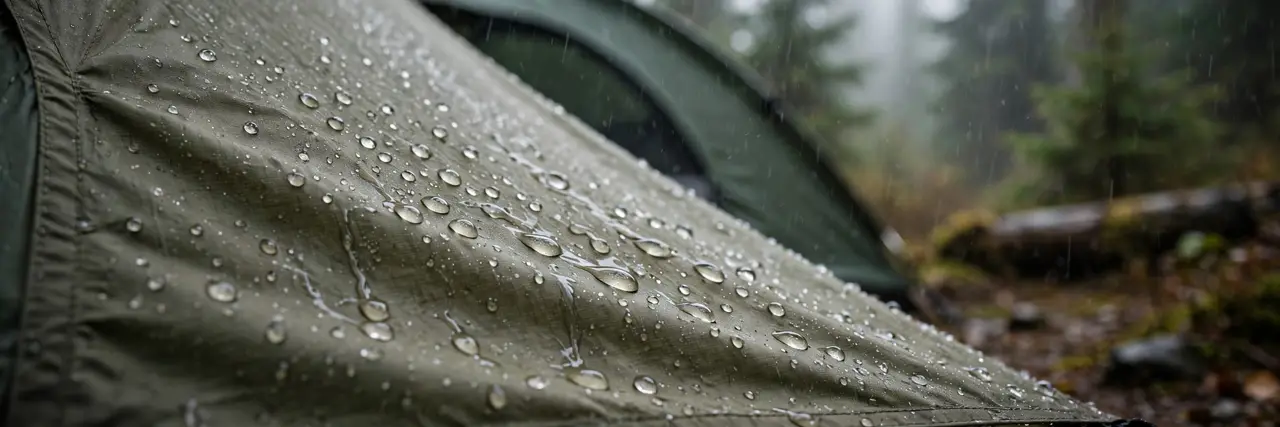
Tent Waterproof Ratings Explained: PU Coatings & Hydrostatic Head
What does 3,000 mm actually mean, and how much do you need? A plain-language guide to hydrostatic head, PU coatings, seam taping and the difference between waterproof and water-resistant.
Every tent spec sheet carries a number like 3,000 mm, and almost nobody explains it. This guide does: what the number measures, what the coating behind it does, and how much waterproofing your trips actually need.
What hydrostatic head measures
Hydrostatic head is the height of a column of water a fabric can hold before it leaks, measured in millimetres. A 3,000 mm flysheet holds back a 3-metre column of water in the test rig. The number is about pressure, not just rain: wind drives rain against fabric, and a camper kneeling on a groundsheet presses water through it, which is why groundsheets are rated higher than flysheets.
What a PU coating does
Most tent fabrics are nylon or polyester with a polyurethane (PU) coating on the inside face. The coating is the waterproof layer; the fabric is its skeleton. PU coatings are affordable and effective, but they age: heat, humidity and storing a tent damp slowly break them down, which is why a ten-year-old tent can wet through in rain it once shrugged off. DWR finishes are different — they make water bead on the surface and roll off, but they are a shower treatment, not waterproofing.
Seams: where tents actually leak
In practice, more water enters through seams than through fabric. Needle holes along every stitch line are tiny tunnels, closed by seam tape on a well-made tent. When you compare tents, taped seams matter as much as the headline number — a 3,000 mm flysheet with untaped seams will leak before a 2,000 mm flysheet with taped ones.
How much do you need?
For most 3-season camping, a flysheet at 2,000–3,000 mm with taped seams is genuinely enough; our range is built at 3,000 mm for exactly that reason. Go higher — and check the groundsheet rating — for exposed mountain weather, long wet seasons, and winter camping where snow load presses meltwater against the fabric for hours.
What is the difference between waterproof and water-resistant?
Water-resistant means a fabric sheds light rain for a while, usually thanks to a DWR finish. Waterproof means a coated, rated fabric with sealed seams that keeps sustained rain out. A tent fly should be waterproof; a pack cover or a stuff sack only needs to be water-resistant.