 WEFARO OUTDOOR
Carbon Fiber vs Aluminum Trekking Poles: How to Choose
Weight, price, durability and failure style differ more than the spec sheets suggest. An honest comparison of carbon and aluminium poles — and a simple rule for choosing between them.
Two poles can look identical on a shelf and behave like different tools on a mountain. The material is why. Here is the full comparison we give our own retail partners, including the parts most comparisons leave out.
Weight: the difference you feel by kilometre twenty
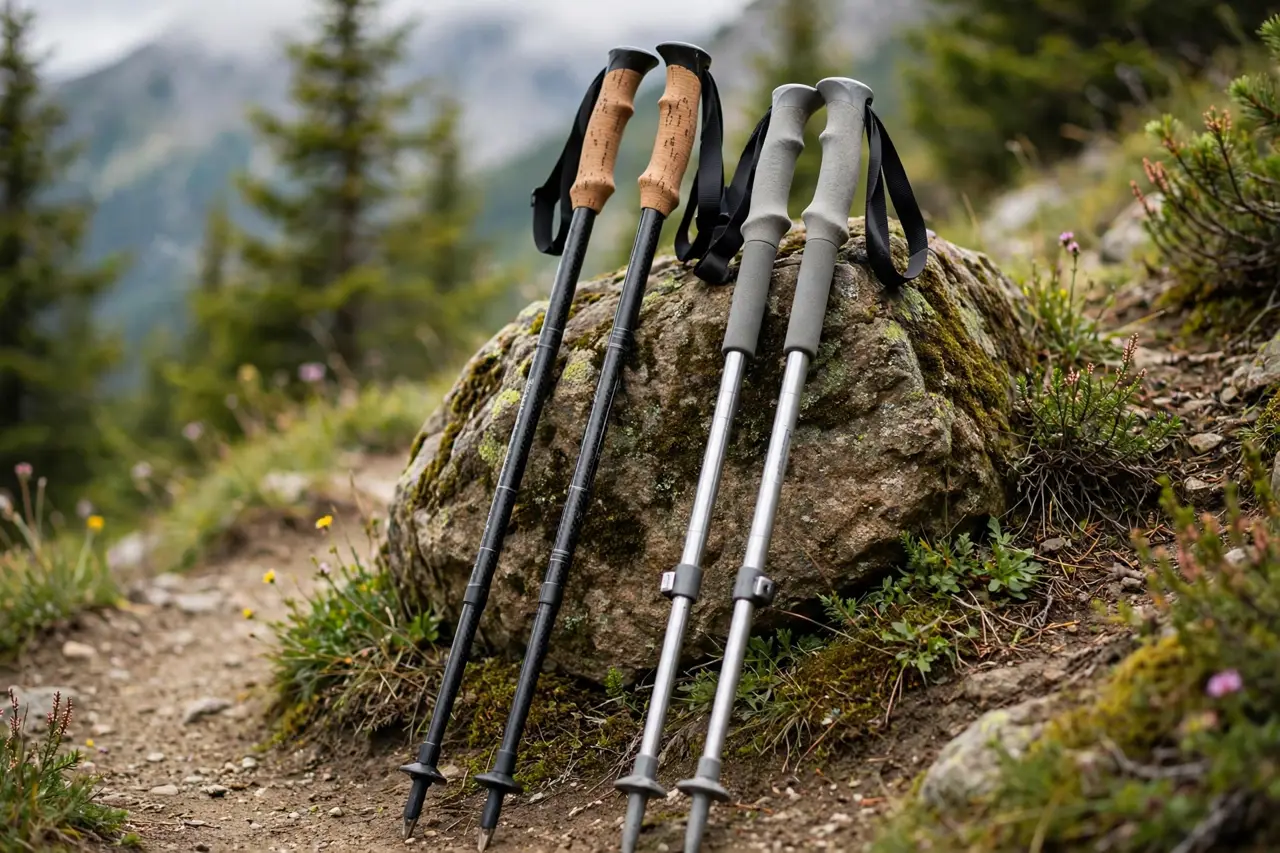
Carbon fibre shafts are meaningfully lighter than aluminium — across a pair, expect to save roughly a third of the weight. On a short walk you will not notice. Over a 25-kilometre day, lifting the lighter pair several thousand times, your shoulders will. Carbon also damps vibration better, which wrists and elbows appreciate on long descents.
Durability: bent versus broken
Aluminium bends; carbon breaks. An aluminium pole that meets a rock usually comes away dented or bent — often bendable back into service for the walk out. A carbon pole overloaded across a gap can snap. In exchange, carbon resists the small knocks and corrosion that age aluminium, and it never bends out of true. Neither material is fragile; they simply fail differently, and your terrain decides which failure you would rather manage.
Price and who pays it gladly
Carbon costs more — in our range, the four carbon models sit above the two aluminium ones for exactly the material reasons above. The buyers who pay gladly are distance hikers, trail runners and anyone whose knees bill them for every gram. Beginners, group leaders lending poles out, and heavy packers on rough ground are usually better served by aluminium.
The rest of the pole matters too
Material is not the whole pole. Cork grips mould to your hand and grip when wet; foam is lighter and cheaper. Flip locks are field-adjustable with cold fingers; twist locks are cleaner but can slip if grit gets in. Carbide tips bite rock and ice; rubber feet protect indoor floors and quiet the trail. Judge the whole tool, not just the shaft.
So which should you choose?
Choose aluminium for your first pair, for lending, and for rocky routes where poles get jammed and levered. Choose carbon when you walk far, walk often, or count your pack weight in grams. If you are between the two, borrow or rent a carbon pair for one long day — the decision usually makes itself by the descent.