 WEFARO OUTDOOR
Tarp Pitching Guide: Sizes & Six Classic Setups
One tarp, six shelters. How to choose a tarp size, read its tie-outs, and pitch the six classic configurations — from the A-frame to the lean-to — with knots that hold in wind.
A tarp is the most under-rated shelter in camping: lighter than any tent, and limited mostly by the pitcher's imagination. This guide covers the two skills that unlock it — choosing a size, and knowing a handful of classic pitches.
Choosing a size
Size follows the job. A compact tarp around 3 × 3 m shelters one sleeper or a hammock. A mid-size tarp covers a tent door, a kitchen, or two sleepers in a pinch. Group tarps earn their size over camp kitchens and communal shade. More important than the headline size is the tie-out count: reinforced points along every edge and a centre line of them down the middle multiply your pitching options more than extra fabric does.
The six classic pitches
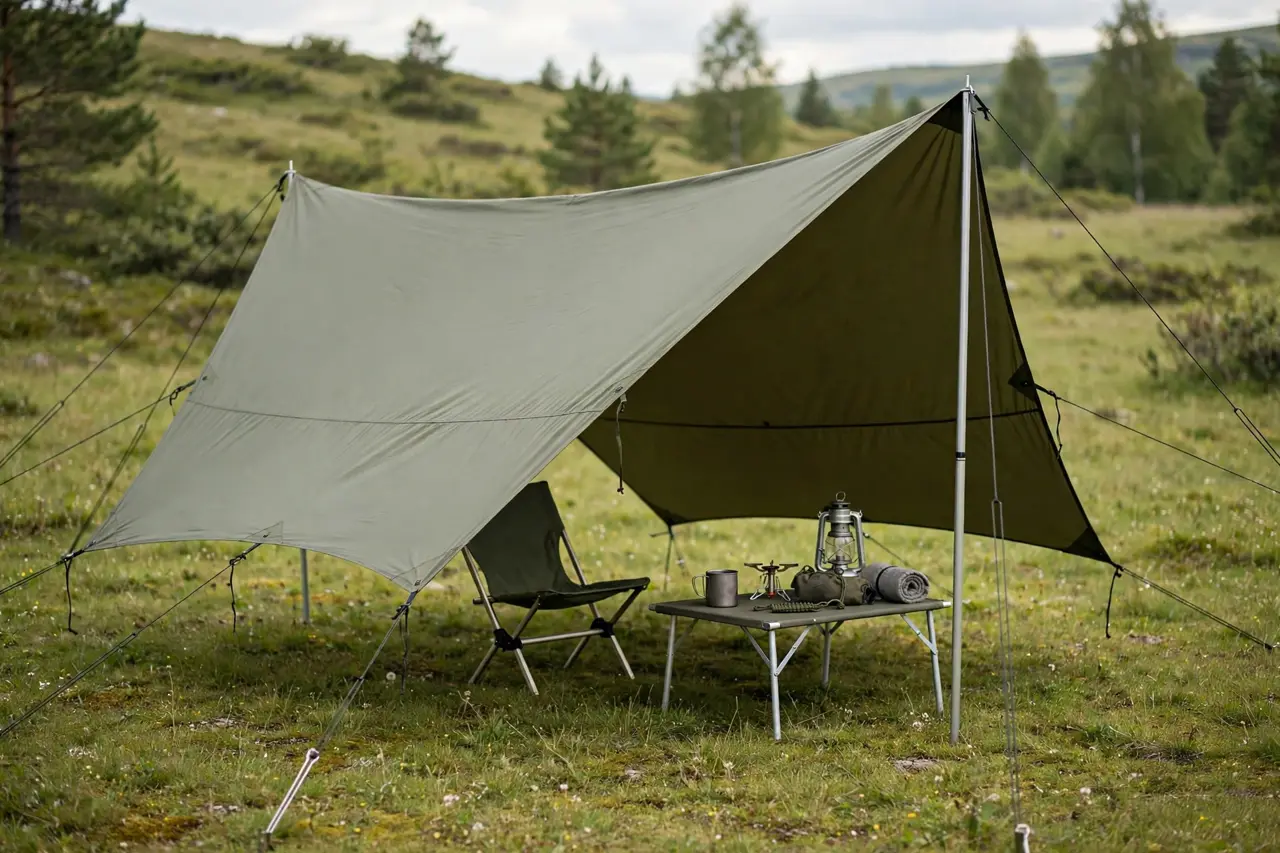
One, the A-frame: a ridgeline between two trees or poles, tarp draped over it — the default shelter, fast and weatherproof. Two, the lean-to: one edge high, one edge staked low, angled against the wind — shade and rain-shedding with a view. Three, the plough point: one corner high, the opposite corner staked to the ground — a wind-shedding solo wedge. Four, the diamond: a square tarp hung by two opposite corners over a hammock. Five, the flat roof: four corners high over a kitchen or table — pure shade and rain cover for groups. Six, the groundsheet-plus: in fair weather, simply a footprint under a tent or a picnic and gear-spreading surface.
Lines, knots and tension
Three knots cover almost everything: a bowline or loop for the ridgeline ends, a taut-line hitch for adjustable guys, and a quick-release for the morning you pack in rain. Pitch the windward side low, keep panels taut so water runs off instead of pooling, and re-tension after the first rain — fabric and cord both relax when wet.
Tarp or tent?
Both, often. A tarp over a tent door makes a kitchen in wet weather; a tarp alone is the lightest honest shelter for summer. Start with the A-frame over your tent at a campsite, learn the lean-to next, and the other four will be obvious by the time you need them.