 WEFARO OUTDOOR
Camp Cookware Guide: Materials & Stove Pairing
Aluminium, stainless steel or titanium? And which stove under them? A practical guide to cookware materials, nesting sets, and matching pots to burners for one to six people.
Camp cookware is bought once and used for a decade, so the material decision matters more than the brand. This guide compares the three metals honestly, then pairs pots with stoves — the half of camp cooking most buyers are left to guess.
Anodised aluminium: the default
Hard-anodised aluminium heats evenly, resists scratches, and keeps a set light and affordable. It is the right default for most campers and the core of our range: a 1.2L solo set at 320 g, and a hard-anodised group set for three to four with two pots, a fry pan and a kettle. Its limits: strong flames and metal utensils age it, and it is not the tool for cooking directly in fire coals.
Stainless steel: the workhorse
Stainless steel — ours is 304 grade — shrugs off dents, soot and scouring, which is why rental fleets and heavy users choose it. It is heavier and heats less evenly, so thin bases can scorch food over a fierce burner; a diffuser or a lower flame fixes most of it. For campfire cooking and group catering, it is the longest-lived choice.
Titanium: the gram-counter's metal
Titanium is corrosion-proof, taste-free and startlingly light — our 1.5L pot and pan set runs about 380 g. It heats fast and unevenly, which suits its real job: boiling water for dehydrated meals and drinks. Backpackers who cook from scratch will be happier with aluminium; backpackers who boil will never go back.
Pairing pots with stoves
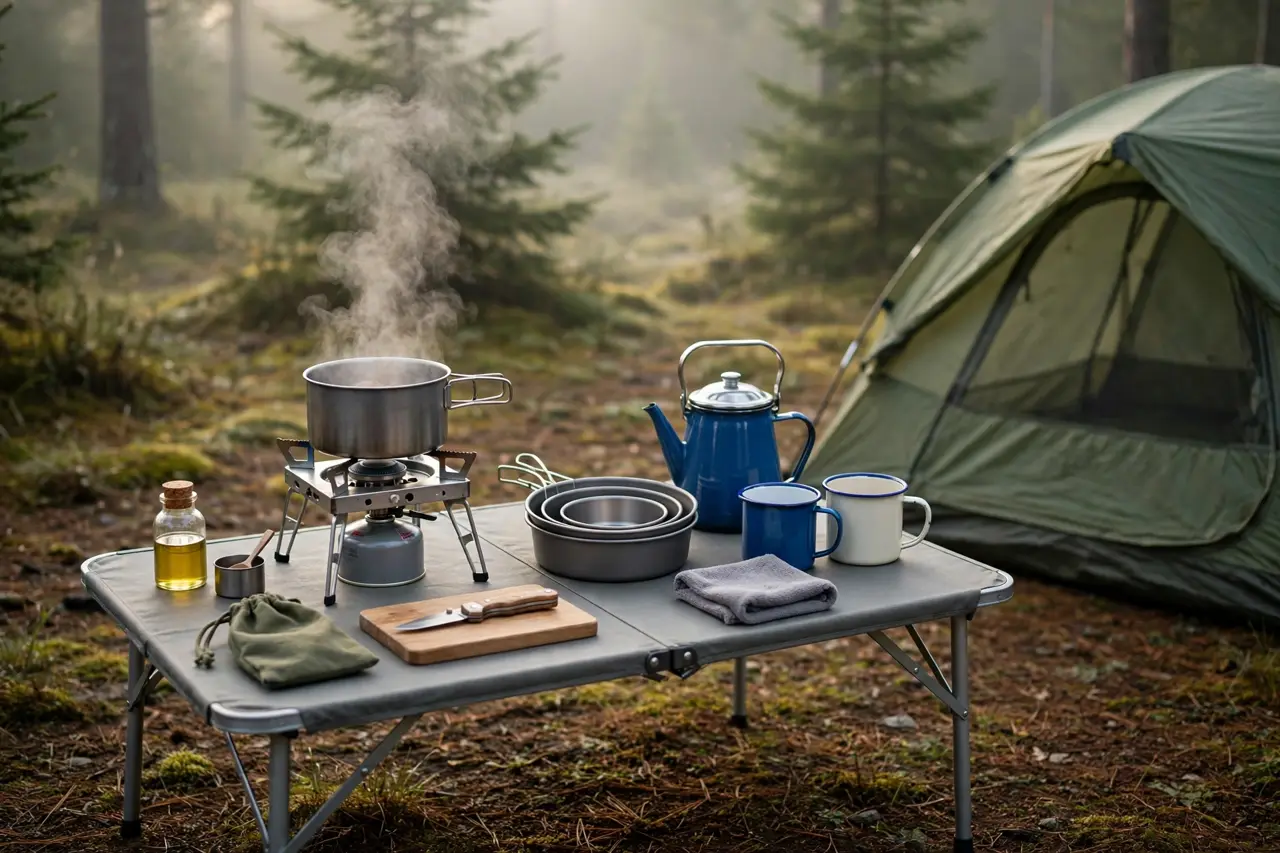
Match base diameter to the burner: a pot much wider than the flame wastes fuel up its sides, and a narrow pot on a wide burner tips. Wind steals more heat than any stove makes, so a windshield or a sheltered kitchen matters more than burner power. For groups, two medium stoves beat one large one — you can boil and simmer at once, and a failure still leaves you a stove.
How many pots do you actually need?
One pot and a lid that works as a pan covers most solo and pair cooking; our nesting sets are built on exactly that logic, adding bowls, cups and a kettle as group size grows. Buy the set for the group you cook for most, not the largest you can imagine.