 WEFARO OUTDOOR
How Insulation Retention Is Tested
Behind the 12–24 hour claims: the standard bench test for insulated bottles, why vacuum walls work, and the habits that make a real bottle match its rated hours in the field.
Every insulated bottle promises hours — ours run from 12 to 24 depending on the model — but few brands explain where the number comes from. It comes from a bench, a thermometer, and a test boring enough to trust.
The physics in one paragraph
Heat moves three ways: conduction through contact, convection through air, and radiation. A vacuum-insulated bottle attacks all three — the vacuum between its two steel walls stops conduction and convection almost entirely, and the walls themselves reflect much of the radiation. What remains is the neck and the lid, the one bridge heat can still cross, which is why lid design separates good bottles from great ones.
The standard test
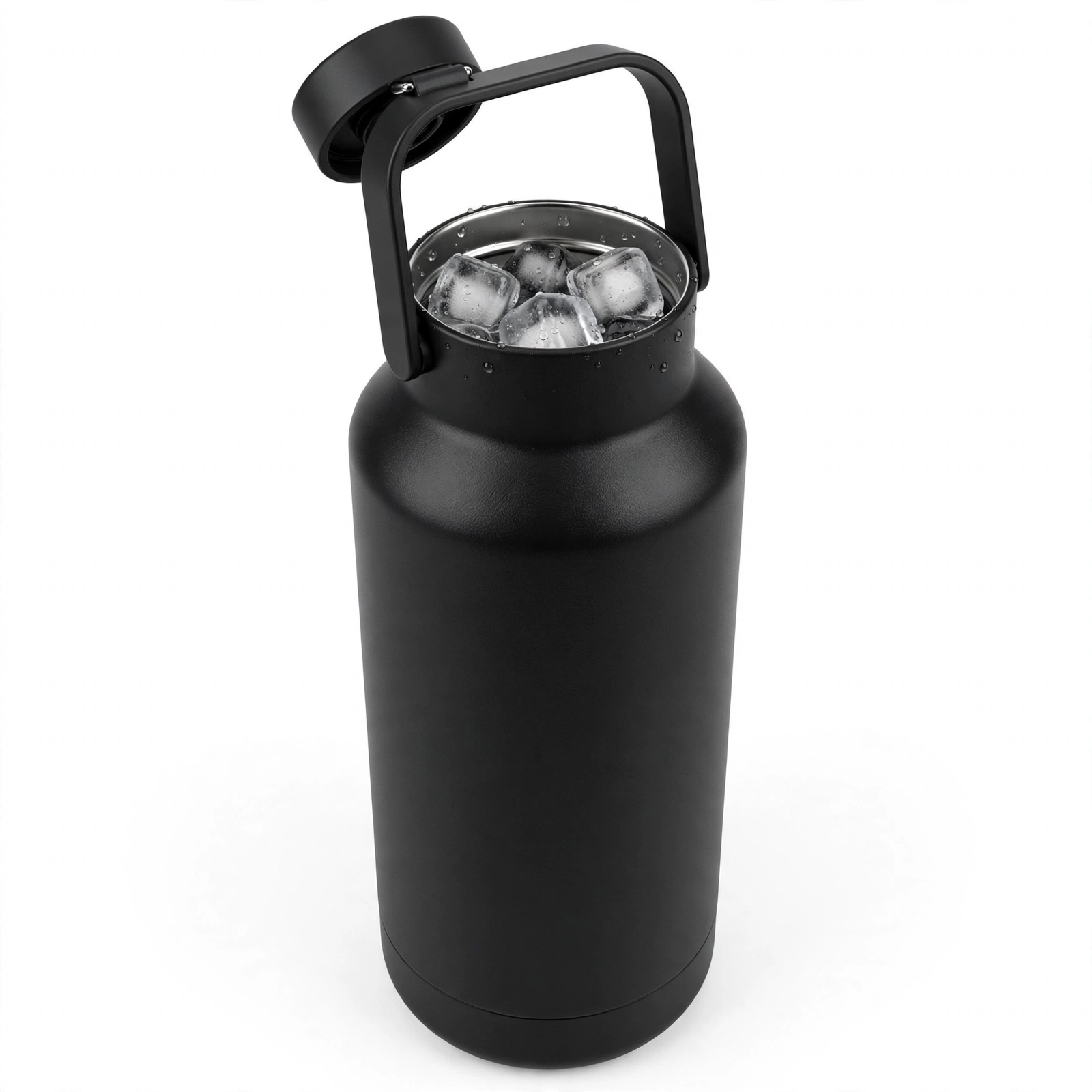
The bench test is simple by design. The bottle is filled with water at a set temperature — near boiling for hot retention, near freezing for cold — sealed, and left at room temperature. After the rated hours, the water is measured again. If it is still above the hot threshold (or below the cold one), the bottle earns its number. Our range is rated this way: 12 hours on the slim everyday models, up to 24 on the wide and family sizes, whose larger volume holds temperature longer for simple geometric reasons.
Why field results differ
The test assumes a full, sealed bottle opened rarely. Real life opens the lid at every stop, pours half out by noon, and leaves the bottle in a hot car or a cold tent porch. Each opening swaps the air inside; a half-empty bottle has more air and less water, so it drifts faster. None of this makes the rating dishonest — it makes it a benchmark, like a car's fuel figures.
Habits that close the gap
Pre-warm or pre-chill the bottle with a first fill of hot or cold water. Fill it fully. Keep the lid on and the bottle out of sun and wind. Do those three and your bottle will perform within sight of its bench number — and choose the size you will actually finish, because a full small bottle outperforms a half-empty large one.