 WEFARO OUTDOOR
Carbon Fiber vs Aluminum Trekking Poles: Which Should Your Store Stock?
Eight pole models, two shaft materials, FOB prices from $8.80 to $43.90. How to split a trekking-pole order between aluminium workhorses and carbon upgrades, using the published weights, grips and prices of the WEFARO OUTDOOR pole range.
For hikers, carbon versus aluminium is a preference. For a retailer, it is an assortment decision: which models turn fast at the entry price, and which carry the margin. Our trekking poles category runs eight models across both materials, so here is the whole ladder with its real numbers — then the stocking logic that follows from them.
The aluminium end: $8.80–$11.90, 265–285 g per pole
Three models anchor the entry tier. The Aluminium Trekking Poles (6061 shaft, EVA foam grip) are $8.80 at 285 g per pole. The cork-grip 7075 aluminium model is $10.90 at 265 g, and the 7075 trail poles $11.90 at 275 g with EVA grips. All adjust 105–135 cm, fold to about 65–67 cm, and use tungsten carbide tips. This is the volume end: first-time hikers, rental fleets, price-led promotions.
The carbon ladder: $23.80–$43.90, 175–245 g per pole
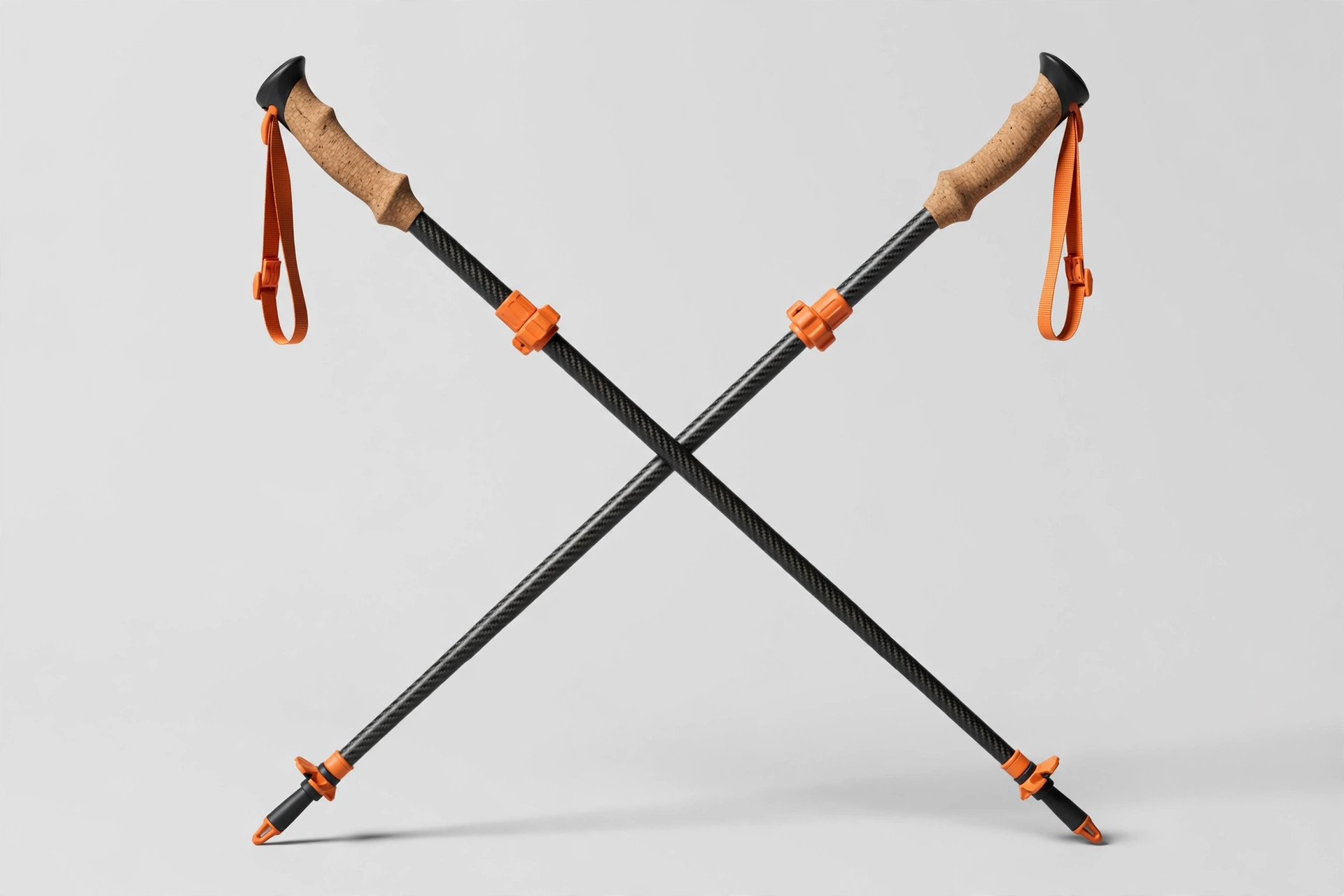
The Carbon Trekking Poles (50% carbon shaft, natural cork grip) start the ladder at $23.80 and 245 g. The 80% carbon kit reaches 225 g at $27.90; the 100% carbon anti-shock model 215 g at $36.90; the ultralight race poles drop to 175 g at $39.90 and fold to 42 cm; the folding carbon model packs to just 38 cm at 195 g and $43.90. Cork grips dominate the carbon end — the visible, touchable upgrade a customer can feel in the shop.
What actually differs — and what does not
Three things change across the ladder: weight per pole (285 g down to 175 g), grip material (EVA foam at the entry end, natural cork as you climb), and folded length (about 65 cm down to 38 cm on the folding models). What does not change: tungsten carbide tips, wrist straps and mud & snow baskets are included across the range, and length adjustment stays in the same 105–135 cm band. For your accessory wall, that means one story, not eight.
A stocking split that works
Anchor with aluminium for volume and first-time buyers; place the 50% carbon model as the 'first upgrade' at roughly 2.7 times the entry price; reserve the 100% carbon and folding models for the weight-led customer who already knows grams matter. Every model follows the same tier structure — base at 50+ pcs, −6% at 300+, −11% at 1000+ — and standard colours are black, silver and orange, with custom colours on OEM orders if the poles will carry your brand.
Frequently asked questions
Which poles should a beginner-focused store stock first?
The aluminium models — $8.80 to $11.90 FOB, 265–285 g per pole, EVA or cork grips. They carry the volume and the fewest price objections.
Is 50% carbon a genuine upgrade over aluminium?
On the published numbers, yes: 245 g per pole against 285 g for the entry aluminium model, with a natural cork grip instead of EVA foam — a difference a customer can feel holding one in each hand.
Do all the poles include straps and baskets?
Yes — wrist straps, mud & snow baskets and tungsten carbide tips are listed across all eight models in the range.
Can the poles carry my store's brand?
Standard colours are black, silver and orange; custom colours are available on OEM orders, with logo branding arranged at order stage.
Talk to the factory: send your product list or questions to [email protected] or message us on WhatsApp +86 173 2007 5632 — we reply with a quotation for your exact quantity, customisation and destination.